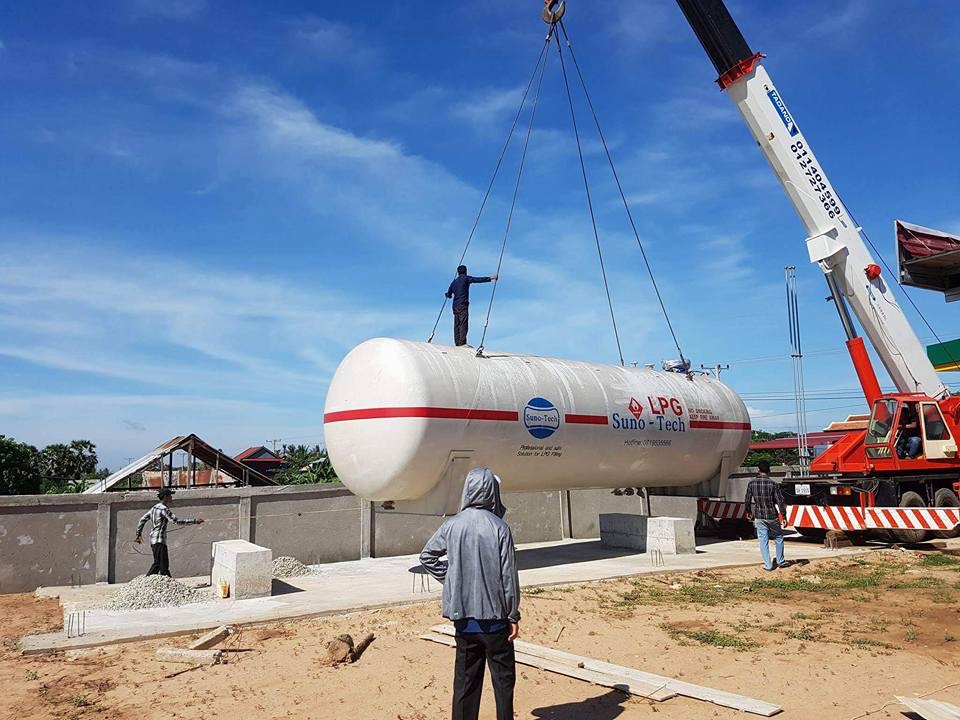
Today, I would like to discuss Ecotec’s installation of an LPG refueling station for a client in Southeast Asia.
Components of a Complete LPG Refueling Station
A complete LPG refueling station should include the following sections:
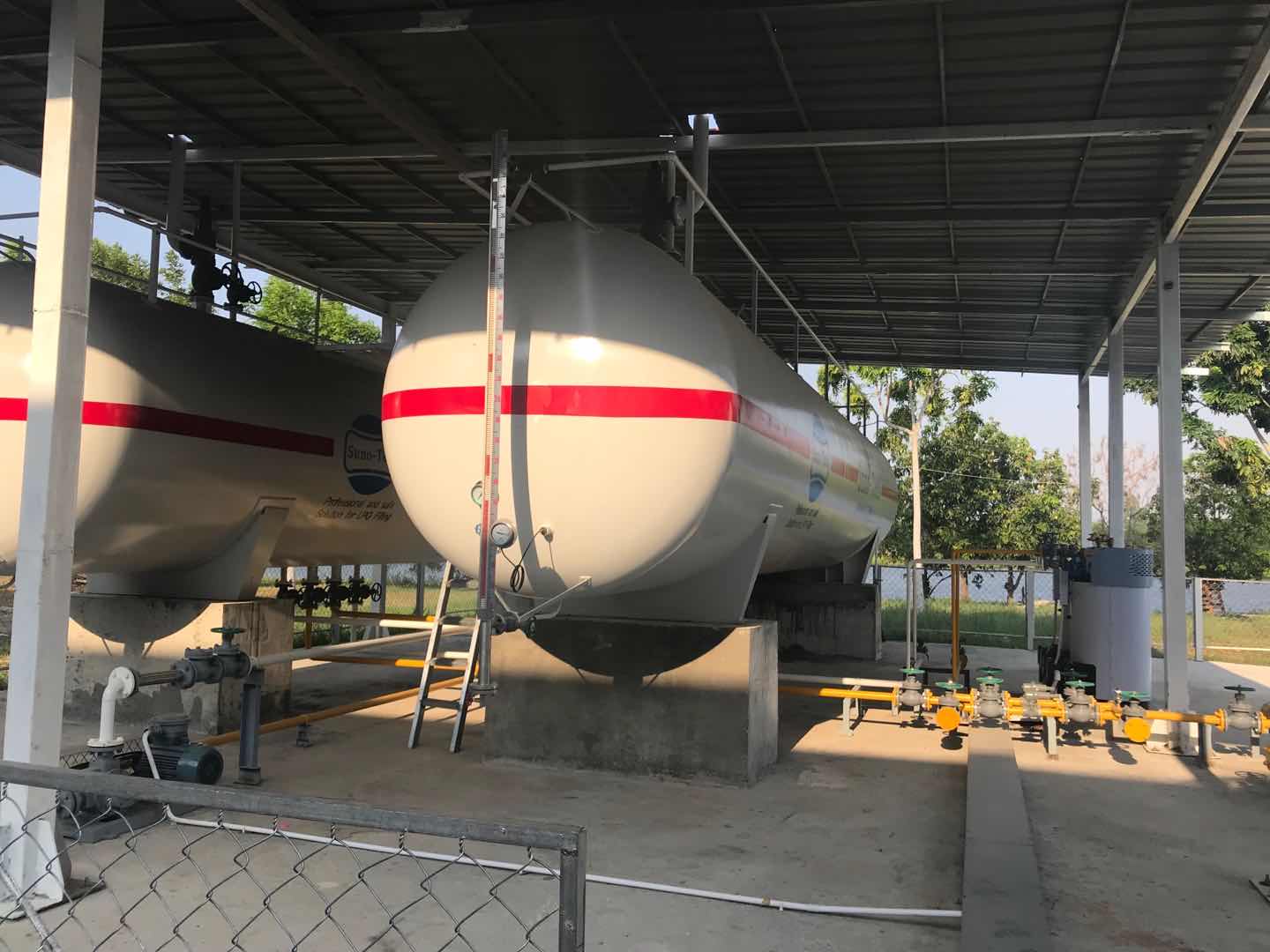
·Storage Tank Area (storage tanks, residual liquid tanks, ladders, protective walls, etc.)
·Compressor Room (compressors and related motors)
·Truck Loading/Unloading Platform (area for loading and unloading raw materials)
·Power Distribution Room (transformer and distribution equipment)
·Refueling Island (dispensers, etc.)
·Lightning Protection Tower
·Firefighting Facilities
·Office and Living Building
Composition of LPG
LPG (Liquefied Petroleum Gas) is a mixture of propane and butane, usually accompanied by small amounts of propylene and butylene. A strong odorant, ethyl mercaptan, is added to LPG so that gas leaks can be easily detected. LPG is produced during crude oil refining or from gases released during petroleum or natural gas extraction.
LPG is often mistakenly considered to be propane. In fact, LPG is a mixture of petroleum and natural gas that exists in a liquid state at room temperature under appropriate pressure. In the United States and Canada, this mixture is primarily considered to consist of propane, while in many European countries, the propane content in LPG is only 50% or lower.
At room temperature, LPG is gaseous but can be liquefied under pressure or at low temperatures. It is non-toxic, but at high concentrations, it can paralyze the central nervous system and cause asphyxiation.
The octane number of LPG is around 110, while gasoline ranges from 90 to 95. This means LPG has an octane rating about 5%–10% higher than gasoline, giving it better anti-knock performance compared to gasoline.
Environmental Benefits of LPG Vehicles and LPG Station Development
Using LPG as a vehicle fuel and building LPG refueling stations offer significant environmental advantages. LPG-powered engines produce clean exhaust emissions with minimal harmful pollutants. Since LPG vaporizes easily, it enters the engine’s combustion chamber in gaseous form and mixes thoroughly with air, enabling combustion that is nearly complete. Compared to gasoline engines, LPG vehicles emit far fewer harmful substances in their exhaust and produce no black smoke commonly associated with diesel engines. Widespread adoption of LPG vehicles can substantially reduce the emission of pollutants from automotive exhaust, leading to improved air quality—especially in the breathing zone—and contributing to better urban atmospheric conditions.
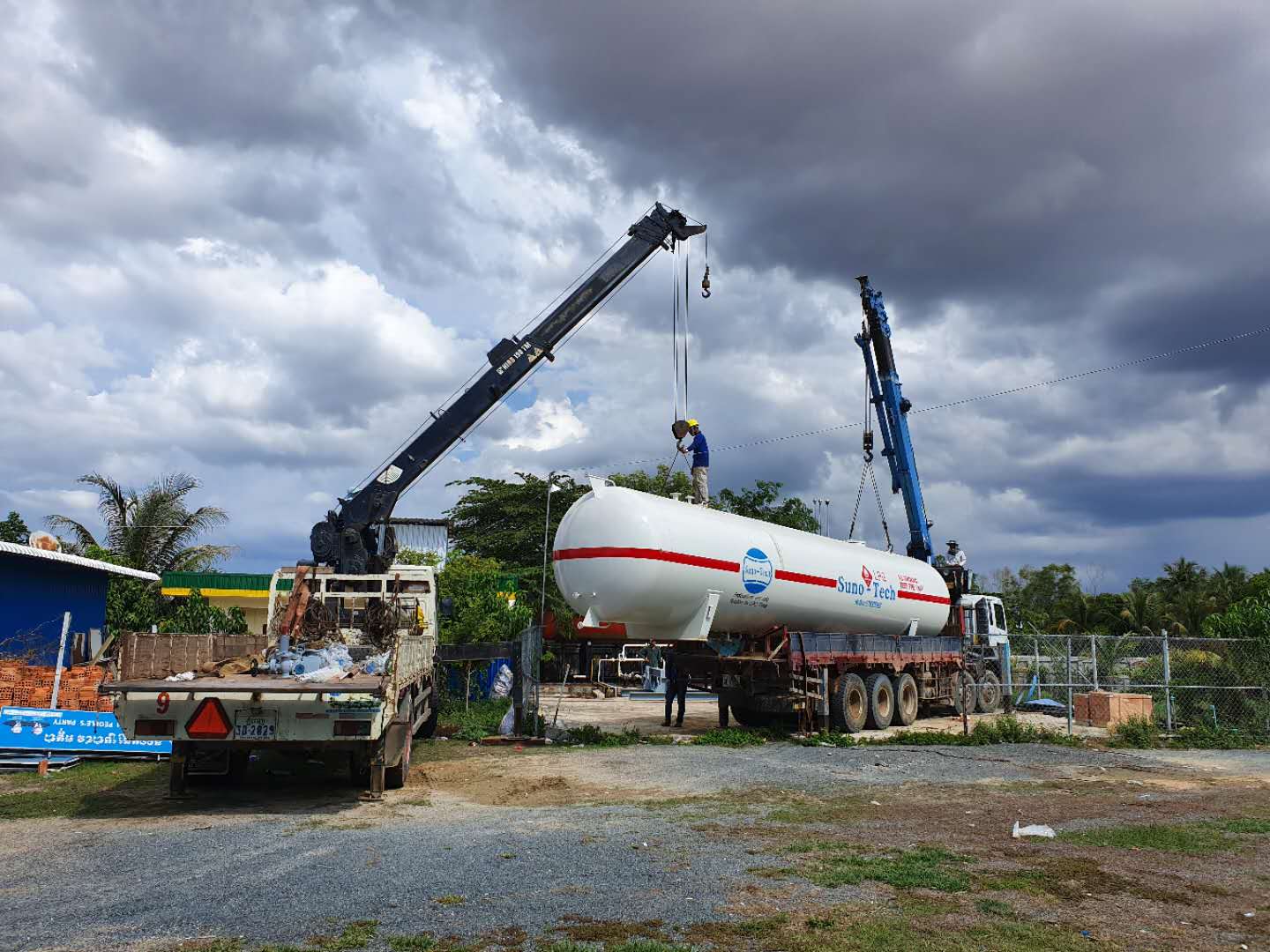
Challenges During Installation and On-Site Solutions
1. Discrepancies Between On-Site Infrastructure and Design Blueprints
Problem: The client’s civil construction did not follow the provided design drawings. Trenches for pipes and cables were omitted, requiring a redesign of ground-level pipe and cable layouts. This increased material usage, raised installation costs, and delayed the project timeline.
Cause: The client prioritized reducing civil construction costs, overlooking potential installation complications and additional expenses. The issue was only identified upon the arrival of the installation team.
Solution: Ecotec promptly revised the design, re-estimated material requirements, and arranged immediate transportation of additional materials.
2. Local Scarcity of Industrial and Installation Materials
Problem: Essential items such as pressure-rated pipes, cables, and connectors were unavailable locally. Available materials were 5–10 times more expensive than in China, severely slowing installation progress.
Cause: The region has limited industrial capacity and relies heavily on imports, with most economic activity centered on services and tourism.
Solution: Ecotec arranged express shipments from China and supplemented urgent needs with purchases from nearby markets (e.g., Singapore). However, customs clearance inefficiencies (taking up to 14 days for air freight) extended the installation period and increased costs.
Key Lessons Learned
Conduct thorough market research on material availability in the project country before shipment. Assess the feasibility of sourcing emergency materials locally.
Verify on-site civil construction against design plans prior to dispatching the installation team. Overseas personnel costs are high; avoiding rework is critical.
Include ample spare installation materials to account for potential shipping damage or last-minute design adjustments.
This case highlights the importance of adaptive planning and local logistics assessment in international LPG station projects. Ecotec’s proactive solutions ensured successful commissioning despite unforeseen challenges, reinforcing the value of preparedness in cross-border energy infrastructure deployments.


