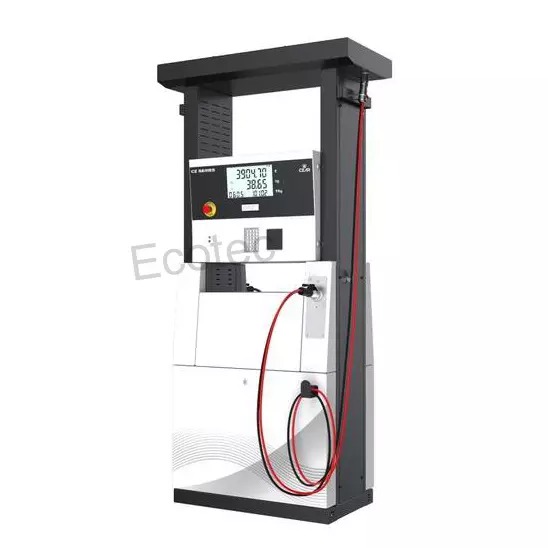
Transitioning a commercial fleet or retail operation to natural gas requires more than purchasing new vehicles. It requires reliable, scalable fueling infrastructure. A CNG Station acts as a sophisticated, integrated system. It safely compresses, stores, and dispenses utility-line natural gas into high-pressure cylinders for vehicle use. Building these facilities introduces complex logistical hurdles. You must look beyond standard pump installations. Modern fleets face rigid dwell times and demanding daily duty cycles. If your fueling infrastructure fails, your trucks stop moving. We will explore the commercial realities behind building a successful fueling site. You will learn how to navigate critical architectural choices and site feasibility studies. We also guide you through evaluating core machinery. By the end of this guide, you will know exactly how to align your facility design with your fleet's operational demands.
Key Takeaways
The viability of a CNG station depends entirely on aligning the station architecture (Fast-Fill vs. Time-Fill) with fleet dwell times and operational logistics.
Reliability hinges on the quality and sizing of core CNG station equipment, specifically the compression and storage modules.
Successful implementation requires navigating utility inlet pressure limitations, electrical load capacities, and strict safety compliance (e.g., NFPA 52).
Evaluating a station provider requires looking beyond CapEx to long-term OpEx, preventative maintenance availability, and scalability.
Fast-Fill vs. Time-Fill: Framing the Business Problem
The foundational decision in natural gas infrastructure involves matching dispensing speed to fleet turnaround requirements. Facility architecture dictates operational success. Over-engineering leads to wasted capital. Under-engineering causes immediate operational bottlenecks. You must select an architecture supporting your fleet's specific duty cycle.
Fast-Fill Stations
Retail stations, taxis, and light-duty public fleets rely heavily on fast-fill architectures. These sites accommodate operations requiring three-to-five-minute fueling times. Drivers experience a process similar to traditional gasoline fueling.
The mechanism relies on pre-compressed gas. The station utilizes high-pressure storage cascades. These storage vessels dump gas quickly into the vehicle cylinder. The compressor replenishes the storage cascades rather than filling the vehicle directly.
Common Mistakes: Over-sizing a fast-fill station for a private overnight fleet wastes resources. The trade-offs include higher initial capital expenditures. You need a larger physical footprint for the bulky storage vessels. The system also forces increased compressor cycling, leading to accelerated wear on mechanical components.
Time-Fill Stations
Return-to-base fleets benefit immensely from time-fill configurations. Refuse trucks, transit buses, and local delivery vans typically park overnight. They do not need rapid fueling during operational hours.
This mechanism dispenses gas directly from the compressor to the vehicles. It bypasses bulk storage cascades entirely. Vehicles connect to individual hoses at their parking slips. The system fills them slowly over an extended period, usually six to eight hours.
Best Practices: Time-fill represents a highly efficient use of equipment. The trade-offs are mostly positive for private fleets. You enjoy lower upfront capital costs. The compressor runs steadily, reducing mechanical wear. However, it severely limits ad-hoc fueling during busy daylight operational hours.
Combination Stations
Some operators deploy hybrid systems. Combination stations balance public fast-fill access with private time-fill fleet yards. A single large compressor feeds high-pressure cascades during the day for retail customers. At night, a valve directs the compressor output to the time-fill posts. This maximizes equipment utilization around the clock.
Operational Comparison Profile
| Feature | Fast-Fill Architecture | Time-Fill Architecture |
| Primary Use Case | Retail, Taxis, Light-Duty | Refuse Trucks, Transit Buses |
| Fill Duration | 3 to 5 minutes | 6 to 8 hours |
| Bulk Storage Needed? | Yes (High-Pressure Cascades) | No (Direct from Compressor) |
| Compressor Wear | Higher (Frequent start/stop cycling) | Lower (Steady, continuous runs) |
| Space Requirement | Large (Requires storage vessels) | Compact (Fewer major vessels) |
Core CNG Station Equipment and Evaluation Criteria
A natural gas fueling facility functions as a miniature processing plant. You must procure industrial-grade hardware. We will break down the primary components required to safely process and dispense compressed gas. Procurement requires strict attention to critical performance metrics.
The Gas Dryer / Desiccant System
Pipeline natural gas contains moisture. You cannot compress wet gas safely. The gas dryer removes this moisture prior to compression. It prevents internal corrosion and stops ice formation inside vehicle fuel lines.
You evaluate a dryer based on its regeneration cycle efficiency. High-quality systems use a twin-tower desiccant design. One tower actively dries the gas. The other tower regenerates its desiccant material using a small heater. Desiccant lifespan dictates long-term maintenance intervals.
The CNG Compressor
The compressor serves as the absolute heart of the facility. It takes pipeline utility pressure, often under 100 psi. It then increases this pressure up to 4,500 psi for storage and dispensing. Selecting the right unit determines site reliability.
When evaluating a CNG compressor, you must focus on capacity. We measure this in Standard Cubic Feet per Minute (SCFM). You must also choose the driver type. Electric motors offer quiet, reliable operation. Gas-engine drives work well in remote areas lacking robust electrical grids. Lifecycle maintenance intervals represent a crucial evaluation metric.
Storage Cascades (For Fast-Fill)
Fast-fill operations require buffer storage. Storage cascades consist of high-pressure vessels rated by ASME or DOT standards. Engineers divide these vessels into three distinct banks: low, medium, and high pressure.
This division sequences gas flow efficiently into vehicles. When a vehicle arrives, it draws from the low-pressure bank first. As the vehicle tank fills and internal pressure rises, the system switches to the medium bank. Finally, it tops off using the high-pressure bank. This prevents the flow from stalling.
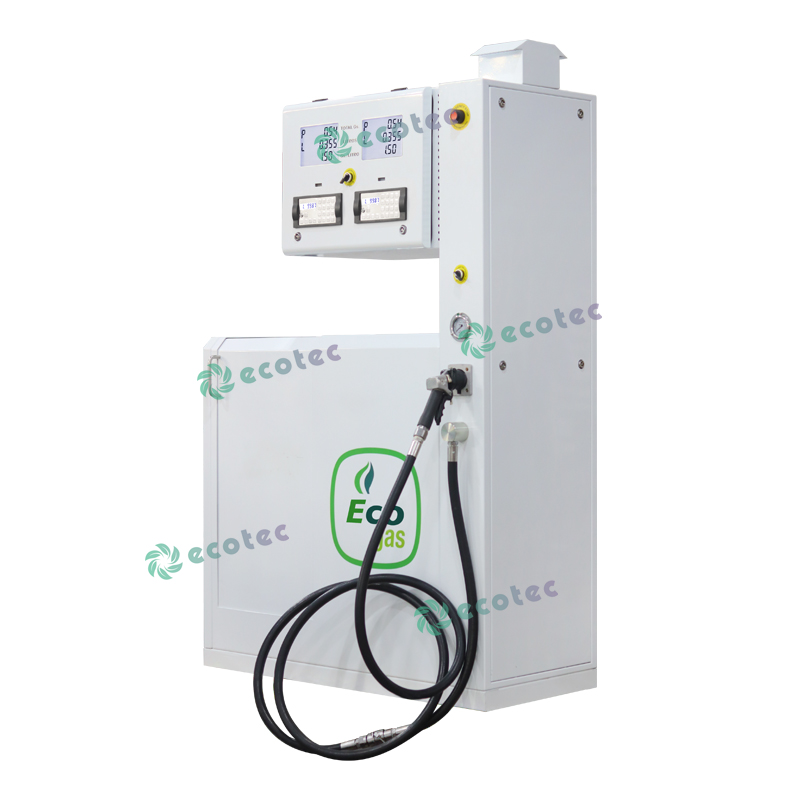
The CNG Dispenser
Drivers interact exclusively with the dispensing unit. The operator-facing terminal regulates the final transfer of fuel. It calculates mass flow precisely. It also ensures accurate temperature compensation during rapid pressure changes.
A modern CNG dispenser relies on Coriolis mass flow meters. These meters measure the actual mass of the gas, ignoring pressure fluctuations. Evaluation metrics include metering accuracy, hose configurations, and seamless point-of-sale (POS) software integration.
The CNG Discharging Pole (Decanting Post)
Many facilities operate without direct utility pipeline access. We call these "daughter" stations. They rely entirely on mobile tube trailers delivering fuel from a central "mother" facility.
The CNG discharging pole facilitates the safe unloading process. It decants compressed gas from trailers into the site's permanent storage. It handles immense pressure transfers. Key evaluation metrics include total flow rating and safety breakaway features. Emergency shut-off integration remains mandatory to prevent catastrophic accidental venting.
Site Evaluation and Implementation Realities
Purchasing excellent hardware solves only half the equation. The physical site must support the infrastructure. Real-world implementation demands rigorous environmental and civil engineering assessments. You cannot force a large facility onto an incompatible plot.
Utility Infrastructure Constraints
You must assess existing pipeline gas pressure immediately. Pipeline flow rates dictate mechanical sizing. High inlet pressure allows you to purchase a smaller, cheaper compressor.
Low inlet pressure creates severe hurdles. It requires significantly larger, more expensive machinery. Pipeline pressures can drop during peak winter heating months. You must design your facility based on the lowest guaranteed winter utility pressure.
Electrical Load Requirements
Industrial machinery draws massive electrical currents. You must evaluate the site's existing power grid carefully. Standard commercial power rarely suffices.
Three-Phase Power: Large electric-drive compressors require robust, 480-volt three-phase power.
Utility Upgrades: Bringing new high-voltage lines to a remote site can take months.
Soft Starters: Implement soft-start electrical panels to prevent grid brownouts when a massive motor kicks on.
Spatial Footprint and Zoning
Physical space planning dictates vehicle flow. Heavy-duty vehicles require wide turning radii. You must factor in the physical space for compressor skids and bulk storage banks.
Routing lanes must prevent traffic bottlenecks during shift changes. Furthermore, local zoning boards enforce rigid setback requirements. Equipment must sit specific distances away from property lines and public rights-of-way.
Compliance and Safety Standards
Natural gas operates safely when managed correctly. Jurisdictional codes eliminate guesswork. The primary regulatory framework in North America is NFPA 52, known as the Vehicular Natural Gas Fuel Systems Code.
You must navigate local fire marshal approvals early in the design phase. Acoustic mitigation also presents a major hurdle. Compressors generate significant noise. Facilities near residential zones require specialized sound-attenuating enclosures. Failing to plan for noise mitigation often delays final occupancy permits.
Shortlisting a CNG Infrastructure Partner
Building a facility involves complex thermodynamic engineering. You should never treat it as a basic construction project. Selecting the right integration partner directly impacts long-term operational success.
Custom Engineering over Off-the-Shelf: Standardized, off-the-shelf equipment packages often fail. They rarely meet specific site utility constraints perfectly. Look for partners who conduct rigorous front-end engineering design (FEED). A custom approach aligns machine sizing perfectly with local pipeline behaviors.
Service Level Agreements (SLAs): Machinery eventually requires maintenance. Evaluate the vendor's local technician network. Assess their spare parts availability. You must secure guaranteed response times in writing. A broken valve means nothing if a technician cannot arrive for three days.
Scalability Planning: Fleet sizes grow over time. Select integrators who design stations with future expansion in mind. They should lay extra underground conduit today. They should provide pre-piping for an additional compressor. Planning for extra storage banks now saves enormous retrofitting costs later.
Common Mistakes: Do not choose a partner solely based on the lowest initial bid. Vendors who cut corners on FEED studies inevitably deliver undersized or inefficient systems. Always demand references from operators running similar fleet profiles.
Conclusion
A functional, reliable fueling facility requires highly customized orchestration. It blends mechanical engineering, utility management, and thermodynamic control. You cannot buy a one-size-fits-all product. Success demands careful alignment of site realities, equipment selection, and operational goals. Whether you choose a fast-fill retail setup or a time-fill depot, your hardware must match your duty cycles.
Your next step requires moving beyond online research. You must conduct a site-specific feasibility study. Contact a specialized engineering team immediately. Request an inlet pressure audit and an initial sizing consultation. Gathering accurate utility data today ensures you build a profitable, highly dependable fueling network tomorrow.
FAQ
Q: How much space does a typical CNG station require?
A: Space requirements vary drastically based on architecture. A compact time-fill skid serving private overnight fleets needs minimal space. It requires only a small concrete pad for the compressor and routing for hoses. Conversely, a sprawling fast-fill public station requires significant acreage. It needs dedicated space for massive storage cascades, multiple dispensing islands, and wide turning lanes for heavy-duty commercial trucks.
Q: What is the lifespan of a CNG compressor?
A: A heavy-duty, industrial compressor boasts an impressive lifespan if maintained properly. Operators routinely see 15 to 20 years of active service. This longevity requires strict adherence to maintenance schedules. You must perform routine oil changes, replace valves, and conduct major top-end overhauls as prescribed by the manufacturer. Neglecting these intervals degrades the lifespan rapidly.
Q: Can a CNG station operate without a direct pipeline connection?
A: Yes. Sites without direct utility pipelines utilize a "Mother-Daughter" configuration. A mother facility compresses gas into mobile tube trailers. Trucks deliver these trailers to the remote daughter site. The daughter facility uses a discharging pole to safely unload the compressed gas into local storage. This model successfully serves remote municipal hubs and isolated industrial sites.
Q: What happens if the power goes out at a CNG station?
A: Modern facilities feature inherent fail-safe designs. When grid power drops, the station safely halts operations. Pneumatic safety valves automatically snap shut, preventing any uncontrolled gas release. To maintain uptime, critical sites often install robust backup diesel or natural gas generators. These generators keep the compressors and dispensers running seamlessly during extended grid blackouts.


