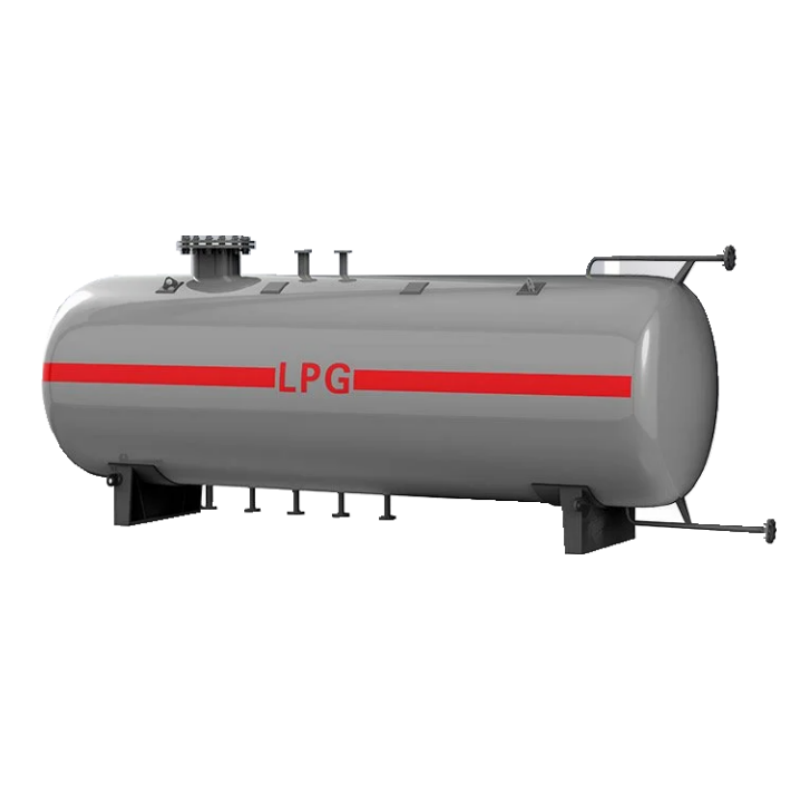
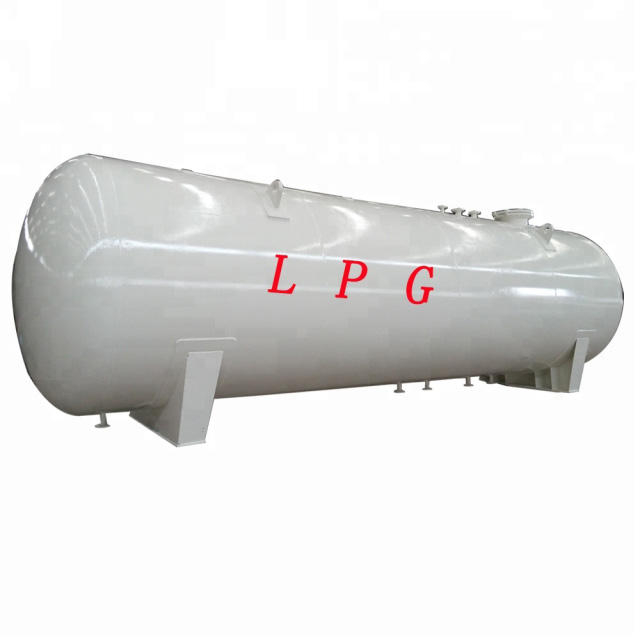
Upgrading to a 20-ton (40m³) bulk liquid petroleum gas storage system marks a critical operational transition for any growing industrial facility. You shift from modular cylinder usage to high-volume industrial dependency. This move fundamentally scales your production capacity. It eliminates constant cylinder changeovers. It stabilizes your daily energy supply effectively.
However, procurement hinges on balancing maximum storage efficiency against strict compliance frameworks. You must carefully navigate site footprint limitations. You also face rigorous safety engineering protocols. Mistakes in this early planning phase can cause heavy project delays. Poor specification choices might even introduce severe safety liabilities to your plant site.
This article provides industrial buyers and plant engineers an objective, reliable framework. We will help you evaluate, site, and specify a proper vessel safely. We base these recommendations on recognized international engineering standards. You will learn exactly what to demand from manufacturers. We guide you through integrating this massive infrastructure into your plant operations smoothly.
Key Takeaways
Usable Capacity Reality: A 40m³ tank safely holds approximately 17–18 tons of liquid LPG due to the mandatory 80–85% safe-fill rule for thermal expansion.
Compliance is Non-Negotiable: Viable tanks must meet ASME Boiler and Pressure Vessel Code (BPVC) standards and adhere to NFPA 58 or regional WLGA guidelines.
Site Preparation: 20-ton tanks require engineered concrete saddles and strict setback distances (typically 50 feet / 15 meters) from property lines and ignition sources.
Vendor Validation: Reputable manufacturers provide transparent Non-Destructive Testing (NDT) reports, hydrostatic test certificates, and post-weld heat treatment documentation.
Engineering Specifications of a 20-Ton (40m³) LPG Storage Tank
Specifying a robust 20 Ton LPG Tank requires understanding distinct mechanical thresholds. You cannot simply order a standard metal cylinder. Buyers must evaluate pressure ratings, material composition, and actual usable volume closely.
We must first detail the design pressure and temperature tolerances. Operating pressures generally hover around 1.77 MPa (250 psi). The tank must withstand extreme external temperature fluctuations safely. Different seasons require different propane-to-butane ratios. Propane exerts much higher vapor pressure than butane. Therefore, the vessel must accommodate these seasonal blend variations seamlessly. If you operate in freezing winters, the steel must resist severe embrittlement. In scorching summers, it must contain aggressive internal vapor expansion.
Material selection defines the operational lifespan of your unit. Engineers universally specify dedicated pressure vessel steel. ASME SA-516 Grade 70 serves as the global gold standard here. It offers exceptional high tensile strength. Its specific carbon and manganese chemistry resists atmospheric corrosion effectively. You want this specific steel grade for heavy-duty industrial applications. It behaves predictably under constant cyclic pressure loads.
Next, we must address the 85% safe-fill rule. Many buyers misunderstand standard capacity metrics entirely. A 40m³ water capacity does not equal 40m³ of usable gas. Liquid petroleum gas expands rapidly when heated. Regulations strictly mandate an 80-85% maximum safe working volume. This vital safety buffer absorbs natural thermal expansion. It prevents catastrophic hydrostatic overpressure inside the steel shell. Consequently, your 40m³ vessel practically yields about 34,000 liters. This translates to roughly 17 to 18 metric tons of liquid product. Understanding this physics principle prevents operational shortfalls. You avoid undersizing your facility requirements.
Let us look at the physical space needed. A typical 40m³ vessel demands a specific physical footprint. You usually see a diameter of about 2.2 to 2.4 meters. The overall length stretches roughly 9.5 to 10 meters. We illustrate these standard specifications in the chart below.
Specification Metric
Standard Engineering Value
Water Capacity
40 Cubic Meters (40,000 Liters)
Maximum Safe Fill Volume
~34,000 Liters (85% Regulatory Limit)
Design Pressure
1.77 MPa (Approx. 250 psi)
Typical Material Grade
ASME SA-516 Grade 70 Carbon Steel
Approximate Dimensions
2.2m Diameter × 9.5m Length
Regulatory Compliance and Safety Standards Framework
Integrating an industrial LPG Storage Tank introduces strict regulatory burdens. Safety remains paramount across all global jurisdictions. You must adhere to established manufacturing standards implicitly. ASME Boiler and Pressure Vessel Code Section VIII Division 1 certification is mandatory in many regions. Equivalent ISO standards also apply globally. These codes dictate precise calculations for shell thickness. They govern head geometry and structural welding procedures. The ASME "U" stamp guarantees structural integrity. Without this certification, you face massive liabilities. You cannot legally operate the vessel.
Installation and handling codes require equal attention. The NFPA 58 (Liquefied Petroleum Gas Code) serves as an authoritative global benchmark. The WLGA (World Liquid Gas Association) also publishes excellent industry practices. These documents outline exact protocols for bulk installations. They cover vaporizers, piping runs, and transfer bulkheads comprehensively. They define how to ground the equipment safely to prevent static discharge. Adhering to NFPA 58 minimizes your legal exposure. It provides a recognized blueprint for operational safety.
Local environmental oversight often complicates project timelines significantly. Agencies similar to the NY DEC enforce specific hazardous substance rules locally. They mandate stringent spill prevention protocols. You must design proper containment areas around bulk transfer points. These bodies require comprehensive registration of your storage facility. They want detailed emergency response plans filed before plant commissioning. You must factor these administrative steps into your schedule. Ignoring local oversight leads to immediate stop-work orders.
Siting, Installation, and Civil Engineering Realities
Proper site selection dictates the ultimate success of your project. Safety clearances act as your first major hurdle. Regulations enforce strict isolation distances universally. These setbacks protect surrounding infrastructure from potential fire hazards. They mitigate risks associated with Boiling Liquid Expanding Vapor Explosions (BLEVE).
We can break down these fundamental siting priorities clearly:
Property Lines: You must place the unit at least 50 feet (15 meters) away from property boundaries. This prevents off-site hazard exposure.
Buildings: Keep a minimum 50-foot distance from any occupied structures or administrative offices.
Ignition Sources: Ban all unrated electrical equipment, vehicles, and open flames within the immediate vapor dispersion zone.
Other Flammables: Separate the installation strictly from oxygen tanks or other combustible chemical storage yards.
These setback rules make early-stage site viability assessments crucial. You cannot squeeze a 40m³ cylinder into a crowded industrial lot safely. You must map out these radiuses before purchasing equipment.
Foundation requirements demand serious civil engineering involvement. A fully loaded 40m³ vessel carries immense physical weight. The steel shell plus 18 tons of liquid creates a massive footprint load. You cannot rest this dead load directly on compacted dirt. We require heavily reinforced concrete saddles. Engineers must design these supports specifically for your local soil bearing capacity. They must calculate regional seismic variables accurately. They also factor in wind load calculations for extreme weather events. The saddle design must allow the steel shell to expand and contract freely during temperature shifts.
You must also choose a specific installation style. We briefly compare above-ground versus mounded setups. Above-ground configurations remain the industry standard everywhere. They offer easier visual inspections. They cost significantly less to implement. However, mounded tanks provide superior blast protection. They completely hide the vessel under engineered sand and earth mounds. This method drastically reduces the required setback distances. If your site lacks adequate space, mounded setups solve the problem efficiently. They do incur a much higher civil engineering cost. You must weigh these realities carefully against your budget.
Required Valving, Safety Fittings, and Telemetry
A bare steel shell accomplishes nothing alone. The valving and safety fittings transform it into a functional asset. Pressure relief systems stand as your primary defense. Engineers install multi-port pressure relief valves (PRVs) on top. These critical devices vent excess vapor automatically if internal pressure spikes. You must inspect them regularly. Regulations enforce mandatory replacement or testing intervals rigidly. Most codes require PRV recertification every five years. You cannot ignore this critical maintenance schedule safely.
Operational controls manage the daily flow of liquid and vapor. You need highly reliable mechanical components here. Excess flow valves sit directly inside the plumbing connections. They utilize spring-loaded mechanisms. They snap shut automatically if an external pipe shears off. This prevents massive product loss during an accident. You also need accurate liquid level gauges. Rochester magnetic gauges provide reliable volume readings. They use magnetic coupling to read levels without creating a direct liquid path. They prevent operators from overfilling the system dangerously. Finally, emergency shut-off valves (ESVs) add another layer of security. Plant managers can trigger ESVs remotely. This action isolates the gas supply instantly during a crisis.
Smart monitoring systems offer massive logistical advantages today. We highly recommend integrating modern telemetry. These digital sensors track liquid levels continuously. They transmit vital data via cellular or satellite networks. You can monitor the tank status directly from your smartphone. Telemetry optimizes your refilling logistics significantly. Dispatchers schedule fuel deliveries only when strictly necessary. This proactive approach prevents costly operational stock-outs entirely. It removes the inherent human error associated with manual gauge reading.
Vendor Evaluation Criteria for Bulk LPG Storage Solutions
You must vet your manufacturing partners ruthlessly. Quality assurance documentation separates reputable vendors from dangerous workshops. Buyers must demand comprehensive testing records before accepting final delivery. Do not trust verbal assurances.
Look for these critical quality assurance markers during procurement:
Radiographic Testing (RT): Demand 100% X-ray inspection on all longitudinal and circumferential weld seams. This reveals hidden porosity or internal cracking.
Magnetic Particle Inspection (MPI): Ensure inspectors use MPI on nozzle attachments and structural welds. This detects microscopic surface-level defects easily.
Hydrostatic Certificates: Require proof of successful water-pressure testing. The vessel must hold pressure well above its design rating without deforming.
Heat Treatment: Ask for post-weld heat treatment (PWHT) charts. This specific furnace process relieves dangerous residual stresses inside the steel shell.
Surface preparation and coating dictate exterior longevity. Atmospheric corrosion destroys poorly painted metal quickly. Evaluate the vendor's painting standards thoroughly. They must sandblast the exterior shell to an SA 2.5 standard. This aggressive blasting removes all mill scale and rust completely. It achieves a near-white metal finish. They should follow up immediately with high-build epoxy primers. Finally, they must apply durable polyurethane topcoats. This specific multi-layer coating system ensures a 20+ year lifespan. It repels moisture and harsh ultraviolet degradation effectively.
Consider the difference between turnkey and fabrication-only services carefully. A fabrication-only vendor simply drops off the tank. You assume all responsibility for piping, foundation pouring, and commissioning. This fragmented approach carries significant integration risks. Alternatively, you can partner with vendors offering EPC services. EPC stands for Engineering, Procurement, and Construction. They handle the entire end-to-end installation process. They manage the plumbing, the safety valves, and the final safety sign-offs. This single-source responsibility often yields safer, faster project completions.
Conclusion
Sourcing a 20-ton LPG tank remains a serious engineering procurement exercise. It is absolutely not a simple commodity purchase. Success requires strict alignment between vessel specifications, local compliance codes, and actual site readiness. You must prioritize certified materials and verified welding processes above all else.
Take these actionable next steps to ensure project success:
Initiate your procurement process by conducting a rigorous site footprint audit.
Verify your property lines and map out the 50-foot setback radiuses clearly.
Request detailed technical CAD drawings from your shortlisted manufacturers immediately.
Demand comprehensive ASME or ISO compliance certifications before signing any purchase orders.
Consult local environmental agencies to register the bulk storage plan early.
FAQ
Q: How many liters of LPG fit in a 20-ton (40m³) storage tank?
A: A 40m³ tank holds exactly 40,000 liters of water capacity. However, regulations enforce a strict 85% safe-fill limit to accommodate thermal expansion safely. This restricts usable volume to approximately 34,000 liters. Depending on the specific gravity of your seasonal propane and butane blend, this translates to roughly 17 to 18 metric tons of actual liquid product.
Q: What is the typical lead time for manufacturing a custom 40m³ LPG tank?
A: You should expect a realistic timeline of 6 to 12 weeks. This period accounts for specialized steel procurement and precision fabrication. It also includes mandatory non-destructive testing (NDT), radiographic weld inspections, hydrostatic pressure tests, and final regulatory sign-offs from third-party certification bodies.
Q: What are the mandatory maintenance intervals for industrial LPG storage tanks?
A: Regulators require strict adherence to maintenance schedules. You must conduct comprehensive visual inspections annually. Pressure relief valves (PRVs) require testing or complete replacement every five years. Additionally, the entire vessel must undergo a rigorous, comprehensive structural recertification every ten years to verify shell integrity and ensure continued operational safety.
Zhejiang Ecotec Energy Equipment Co., Ltd. is a professional manufacturer of gas station equipment, can offer customer complete solution from design to after-sales service with good price and quality.