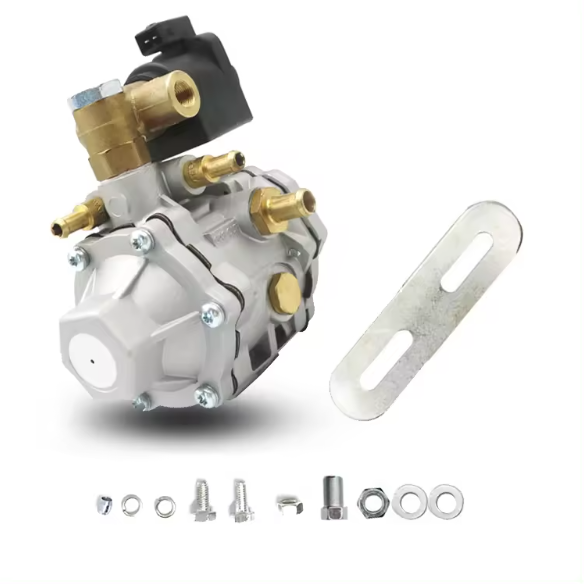
Motorcycle enthusiasts often view alternative fuels through a lens of deep skepticism. Riders fear noticeable power loss and resent the idea of bolting bulky hardware onto sleek frames. Early pneumatic systems justified these fears. They delivered sluggish throttle responses and inconsistent fueling. However, a major technological shift has completely changed this landscape. Modern sequential injection systems now pair seamlessly alongside precision high-pressure reducers. They bridge the historical gap between fuel economy and high-RPM performance. You no longer have to sacrifice riding dynamics to use cleaner fuel sources.
We wrote this article to provide a clear technical evaluation framework. You will learn how to select and implement advanced hardware effectively. We will show you how to maintain optimal engine dynamics while ensuring strict safety compliance. By understanding these mechanical principles, you can confidently upgrade your motorcycle's fuel system.
Key Takeaways
Performance Parity: Upgrading to an LPG/CNG motorcycle injection kit with a precision high-pressure reducer enables near-identical power output to gasoline through sequential delivery.
Hardware Selection: Evaluating an autogas conversion kit requires prioritizing compact form factors, dynamic pressure stability, and ECU compatibility over baseline cost.
Implementation Risks: Successful deployment hinges on managing thermal dynamics and stringent spatial constraints unique to motorcycle chassis.
Compliance is Non-Negotiable: Component selection must be strictly vetted against international safety standards (e.g., ECE R67/R110) to ensure operational safety and liability protection.
The Mechanical Imperative: Why High-Pressure Reducers Dictate System Performance
Legacy vaporizers created significant problems for motorcycle engines. Older pneumatic systems relied on engine vacuum to pull gas into the intake manifold. This approach utilizes basic venturi principles. It works adequately for low-revving industrial motors or older passenger cars. However, it fails completely under the demands of a modern motorcycle. Motorcycle engines spool up incredibly fast. Their variable RPM ranges expose the critical flaws of low-pressure delivery. Riders experienced dangerous lean spikes during rapid acceleration. The outdated hardware simply could not flow gas fast enough. You cannot rely on suction alone for high-performance applications.
We must look to high-pressure solutions to fix these fueling gaps. Advanced reducers represent a massive leap in fluid engineering. Components utilizing AT12-style architecture handle extreme tank pressures effortlessly. They step down this pressure while maintaining absolute flow stability. The gas must reach the injection rail at a constant, predictable rate. When pressure fluctuates, the engine stumbles. High-quality reducers use multi-stage chambers to guarantee stable delivery across all throttle positions. They employ heavy-duty springs and specialized levers to modulate the incoming liquid gas. This controlled expansion ensures a steady vapor flow.
This pressure stability unlocks incredible sequential injection synergy. A modern Autogas Conversion Kit requires rock-solid pressure data to function correctly. Stable pressure allows the primary or piggyback ECU to calculate precise injection timing. The system fires gas directly into individual intake runners right before the intake valve opens. This targeted delivery minimizes lean-burn risks dramatically. It also prevents premature exhaust valve recession. You get smooth power delivery matching original equipment specifications. The engine responds exactly as the original manufacturer intended.
Evaluation Dimensions: Assessing an LPG/CNG Motorcycle Injection Kit
Volumetric efficiency dictates how well your engine breathes under heavy load. You must match the reducer's maximum flow capacity to the engine's peak output. A mismatched system causes catastrophic high-RPM starvation. Engineers rate these reducers in kilowatts (kW) or horsepower (HP). Always select a reducer rated 15% to 20% higher than your motorcycle's peak horsepower. This overhead guarantees adequate fuel supply during aggressive overtakes. A well-specced LPG/CNG Motorcycle Injection Kit handles peak demand effortlessly. It prevents the ECU from triggering error codes due to low rail pressure.
Form factor and modularity present unique packaging challenges. Motorcycles lack the cavernous engine bays found in passenger cars. You have virtually zero unused space behind the fairings. Reducers must be ultra-compact. They require excellent heat resistance to survive near exhaust headers. You also need flexible mounting options to accommodate varied chassis angles. A bulky unit ruins the bike's center of gravity. It also interferes with routine maintenance tasks like oil changes.
Sensor integration determines overall system intelligence. Advanced setups rely heavily on MAP (Manifold Absolute Pressure) sensors. They also need accurate gas temperature sensors mounted on the injector rail. The ECU requires fast-polling sensors to adjust fuel trim in real-time. Slow sensors cause noticeable lag when you twist the throttle. We recommend sensors capable of millisecond response times. These rapid inputs allow the processor to compensate for sudden altitude or temperature changes.
Material engineering defines component lifespan. Commercial gas often contains harsh impurities like heavy oils and metallic particulates. You should inspect the construction materials closely before purchasing.
Component Area
Recommended Material
Engineering Benefit
Main Housing
CNC-Machined Aluminum
Superior heat dissipation, minimal weight penalty, high structural integrity.
Diaphragm
Specialized Polymer/FKM
Resists chemical degradation, maintains flexibility under extreme temperature shifts.
Fittings
Brass or Treated Steel
Prevents thread stripping during maintenance, highly corrosion-resistant.
These specific materials ensure your hardware survives years of harsh riding conditions. They resist the oily residues often found in commercial fuel pumps. High-grade alloys prevent warping under extreme thermal cycling.
Motorcycles present highly unpredictable thermal environments. Thermal management challenges require serious engineering attention. Air-cooled models lack centralized liquid cooling systems. This makes reducer heating incredibly complex. Expanding gas absorbs massive amounts of heat from its surroundings. The reducer will literally freeze solid if you fail to heat it. For liquid-cooled bikes, you must properly route engine coolant to the reducer. You must prevent gas freezing without overcooling the motorcycle engine itself. Mechanics often use specialized bypass valves to balance this thermal load. They splice into the coolant lines carefully to maintain optimal flow rates.
Harness and wiring density create massive headaches for installers. You cannot simply stuff automotive-grade electronics into a motorcycle frame. Cars offer plenty of room for excess wire loops. Bikes do not. You need custom-length wiring harnesses designed specifically for two-wheeled applications. They must carry strict IP67 weather-sealed ratings. Exposed wires will short out during the first heavy rainstorm. Heat shrink tubing and braided nylon loom wrap offer essential protection against engine vibration. Proper grounding to the motorcycle frame prevents erratic ECU behavior.
Calibration and mapping require professional expertise. Plug-and-play solutions do not exist for high-performance tuning. You must put the bike on a dynamometer to achieve perfect results.
Here are the vital steps for building custom 3D fuel maps:
Establish a baseline dyno run using standard gasoline.
Log real-time MAP, RPM, and throttle position sensor data.
Populate the base RPM versus load matrix in the new ECU software.
Execute step-tests at fixed RPM intervals to adjust the fuel trim.
Perform sweeping acceleration tests to eliminate mid-range flat spots.
You ensure smooth power delivery through rigorous dyno testing. Skipping this process guarantees poor rideability and potential engine damage. Tuning requires patience to blend the fuel maps seamlessly.
Compliance and Safety: Navigating Authoritative Standards
Regulatory baselines separate professional gear from dangerous knock-offs. You must evaluate any system against strict international standards. ECE R67 certification covers LPG components rigorously. ECE R110 certification dictates CNG safety requirements. These standards serve as the primary filter for shortlisting hardware. They guarantee the components survived extreme burst-pressure tests. They also ensure the materials will not degrade over time. Operating uncertified equipment invites massive liability risks. It also jeopardizes your personal safety on the road. Insurance companies often deny claims involving uncertified fuel modifications.
Pressure relief mechanisms and solenoid reliability represent your first line of defense. Accidents happen. Motorcycles occasionally tip over at intersections. An integrated, rapid-response shut-off valve is absolutely mandatory. It stops fuel flow instantly if the engine stalls. The system must also feature a mechanical pressure relief valve. This mechanism safely vents excess gas if tank pressure spikes due to extreme ambient heat. These solenoids must draw minimal electrical current to protect the motorcycle stator.
You should carefully assess a manufacturer's longevity claims. Look beyond glossy marketing brochures. Examine their lifecycle testing data thoroughly. Reliable manufacturers publish clear maintenance intervals for every component.
Liquid phase filters typically require replacement every 10,000 kilometers.
Vapor phase filters demand similar attention to prevent injector clogging.
Reducer diaphragms usually need a full inspection and rebuild between 30,000 and 50,000 kilometers.
These maintenance intervals prove the manufacturer understands real-world wear and tear. A strong warranty backs up these engineering claims. Always secure a minimum two-year warranty on electronic and mechanical components. This coverage protects your investment against premature manufacturing defects.
Shortlisting Logic: Selecting the Right B2B Supplier or Hardware Partner
Selecting a vendor requires strict due diligence. Documentation and technical support define a reliable partner. A reputable vendor provides comprehensive wiring schematics. They offer open software access for deep ECU tuning. They also publish clear hardware compatibility charts. You need to know exactly which injector nozzles fit your specific intake runners. Without technical support, a minor calibration error becomes an unsolvable nightmare. The vendor should provide responsive troubleshooting channels for technicians.
Supply chain transparency and spare parts availability matter immensely. You must avoid proprietary kits. Closed systems lock buyers out of third-party replacements. If the original manufacturer goes bankrupt, your hardware becomes useless. Ensure the system uses standard injector sizing. You also need accessible rebuild kits for the high-pressure reducer. Standardized O-rings, diaphragms, and filter cartridges keep your fleet running smoothly. Open-source compatibility reduces long-term maintenance headaches.
Proof of concept removes the guesswork from purchasing. Never commit to large-scale workshop implementations blindly. Require transparent test data from the supplier. Ask for case studies on similar engine displacements. If you operate a commercial delivery fleet, request pilot-program availability. Testing a single unit under real-world conditions reveals hidden flaws. It confirms the hardware delivers the promised performance parity. Do not accept laboratory data as the final truth. Demand street-proven results logged over thousands of kilometers.
Conclusion
Optimizing motorcycle performance using alternative fuels represents a mature, highly viable technology. High-quality pressure reduction and precise sequential injection have eliminated older performance compromises. We now see engineering solutions matching the dynamic demands of modern sport and touring bikes. Neglecting due diligence during component selection guarantees failure. You must respect thermal integration constraints and adhere strictly to flow-rate requirements.
Take these concrete steps to advance your fuel system project. First, audit your currently shortlisted hardware strictly against ECE R67 or R110 certifications. Second, verify the reducer’s kilowatt rating explicitly exceeds your engine’s peak output by at least twenty percent. Finally, contact a specialized engineering vendor to configure a bespoke harness and ECU mapping strategy for your specific chassis.
FAQ
Q: Can an LPG/CNG motorcycle injection kit match the throttle response of gasoline?
A: Yes, provided the system utilizes sequential injection paired with a fast-acting high-pressure reducer and a properly calibrated 3D fuel map.
Q: What is the typical maintenance interval for a high-pressure motorcycle autogas reducer?
A: While it varies by manufacturer and fuel quality, liquid/vapor phase filters typically require changing every 10,000 km, with a full reducer diaphragm inspection recommended at 30,000 to 50,000 km.
Q: Are there space limitations for mounting these conversion kits on sportbikes?
A: Yes. Space is the primary implementation risk. Solutions require ultra-compact, motorcycle-specific reducers and creative placement of the ECU and injection rail, often requiring custom fabrication for optimal routing.
Q: Will converting to autogas cause engine overheating or valve damage?
A: Modern, precisely tuned sequential systems mitigate lean-burn conditions (the primary cause of overheating). However, for engines without hardened valve seats, installing an electronic valve saver fluid injection system is a highly recommended precaution.
Zhejiang Ecotec Energy Equipment Co., Ltd. is a professional manufacturer of gas station equipment, can offer customer complete solution from design to after-sales service with good price and quality.