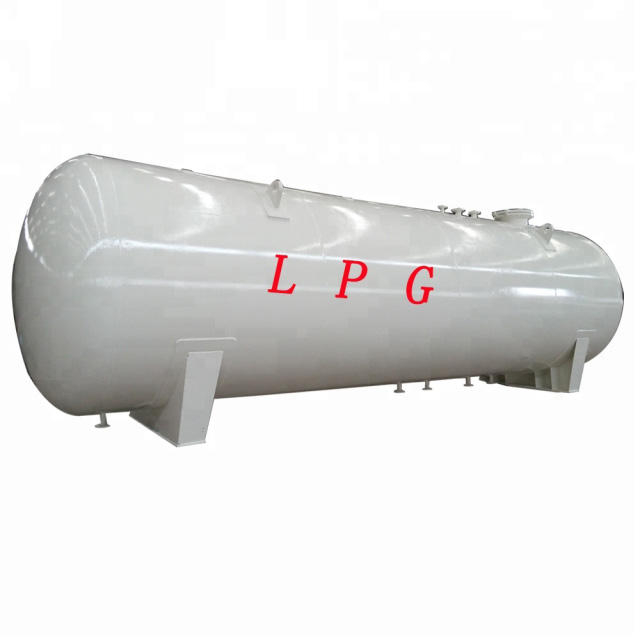
Mid-to-large B2B operations face a constant balancing act. You must continually juggle the physical footprint of on-site fuel storage against the strict economic necessity of buying propane in bulk. Finding the perfect middle ground often feels impossible for growing enterprises. Enter the 20 CBM (Cubic Meter) LPG tank. It serves as the strategic sweet spot for ambitious facilities. These sites outgrow standard commercial tanks rapidly. Yet, they do not quite require massive terminal-scale storage spheres.
Procuring this kind of industrial storage asset requires looking far beyond face-value volume limits. We will explore how to thoroughly evaluate compliance frameworks and actual usable capacity. You will learn how to maximize your bulk purchase strategy to ensure long-term profitability. Readers will also discover installation best practices and modernization techniques. This guide prepares you to make an informed, highly strategic infrastructure upgrade.
Key Takeaways
**True Usability:** A 20 CBM LPG tank holds approximately 5,283 gallons of water volume, but strict 80/85% filling rules limit functional liquid capacity to prevent over-pressurization.
**Strategic Economics:** Upgrading to this vessel size unlocks bulk transport delivery tiers, effectively insulating operations against seasonal price spikes.
**Deployment Realities:** Installation requires strict adherence to minimum clearance distances, structural impact protection (bollards), and regional safety codes (e.g., NFPA 58, OSHA).
**Future-Proofing:** Integration with IoT telemetry and remote monitoring is now the baseline for optimizing operational costs and avoiding dry-runs.
Understanding True Capacity: The 20 CBM LPG Tank and the Filling Rule
Buying bulk fuel storage demands precision. Business owners often misunderstand how volumetric capacity translates into functional daily usage. A 20 CBM LPG Tank offers substantial space. However, you cannot fill it to the brim. Let us examine the exact mathematics and safety regulations dictating your actual fuel inventory.
The Math Logic
Converting cubic meters to everyday fuel metrics provides clarity for procurement teams. The gross math follows a straightforward conversion path:
Base Volume: 20 cubic meters equals exactly 20,000 liters of internal water capacity.
Gallon Conversion: 20,000 liters translates to approximately 5,283 US gallons.
Regulatory Reduction: Applying the mandatory safety margin reduces this gross figure significantly.
The Vapor Space Mandate
Propane exists as a liquid under pressure. It expands rapidly when surrounding temperatures rise. Safety codes enforce a strict 80% filling rule for most standard applications. Some specialized bulk setups allow up to 85%. You must leave the top 20% of the interior entirely empty. Engineers call this the "Vapor Space." This critical buffer absorbs thermal expansion safely. If you fill the container to 100%, rising temperatures will cause hydrostatic pressure spikes. This triggers relief valves or causes catastrophic structural failure.
Procurement Pitfall: Actual Usable Volume
Failing to account for the vapor space mandate leads to severe undersizing errors. Your true usable capacity drops to 16,000 liters. This equals roughly 4,226 US gallons. Do not assume a 20 CBM container can receive a full 20,000-liter delivery. Operations managers who ignore this reality often face emergency delivery fees. They run out of fuel during peak production cycles.
Capacity Summary Chart
Measurement Metric | Gross Capacity (100%) | Usable Capacity (80%) |
Cubic Meters (CBM) | 20 CBM | 16 CBM |
Liters | 20,000 L | 16,000 L |
US Gallons | ~5,283 Gal | ~4,226 Gal |
Ideal Applications for a 20 CBM Industrial Propane Tank
Deploying an Industrial Propane Tank serves specific commercial thresholds. This size bridges the gap between light commercial cylinders and massive refinery spheres. It fits perfectly into high-demand, continuous-use scenarios.
Mid-Scale Manufacturing
Factories require reliable primary energy. Process heating and industrial ovens consume massive amounts of BTUs daily. Standard 1,000-gallon tanks drain too quickly here. The 20 CBM model provides a robust buffer. It easily powers continuous-run forklifts across multiple shifts. Your facility maintains steady production without relying on daily fuel trucks.
Agricultural Operations
Farming operations face intense, short-term energy demands. Crop drying seasons require high, continuous heat output. Farmers cannot afford equipment downtime while waiting for frequent refilling. A 20 CBM container ensures grain dryers run uninterrupted. It guarantees harvest deadlines remain intact despite regional supply chain delays.
Fleet Fueling Terminals
Autogas represents a growing sector for commercial transit. Dispensing stations need sufficient inventory to support daily high-volume fleet cycles. Delivery vans and school buses pull hundreds of gallons per shift. This medium-bulk vessel supplies enough inventory to keep fleets rolling. It prevents your autogas station from suffering costly stock-outs.
Scalability and Manifolding
Businesses rarely stop growing. Facility managers appreciate the modular nature of this asset class. You can manifold multiple 20 CBM vessels together. Engineers connect them in series using specialized piping. This phased expansion strategy works brilliantly. You simply add another container to the system later. This avoids the massive capital expense of tearing out old infrastructure.
Evaluating Installation, Siting, and Bulk Economics
Acquiring bulk storage fundamentally alters your operational economics. You must balance installation methods against long-term delivery savings. Making smart choices during this phase ensures maximum return on your infrastructure investment.
Above-Ground vs. Underground Models
Buyers must choose between above-ground and underground configurations. Each orientation offers distinct commercial advantages.
Above-Ground Installations: These dominate the industrial landscape. They require lower initial installation capital. Maintenance crews easily perform visual inspections. You can quickly spot surface rust or valve degradation. Furthermore, above-ground units offer mobility. You can relocate the asset if your business moves to a larger facility.
Underground Installations: These excel in space-constrained or aesthetically sensitive environments. They provide natural soil insulation against extreme temperature fluctuations. However, they demand higher upfront costs. You must pay for deep excavation, specialized cathodic protection coatings, and complex municipal permits.
Delivery Economics
Owning a large LPG Storage Vessel transforms your purchasing power. Smaller businesses rely on expensive, frequent drop-offs. Your upgraded capacity changes the equation. You can easily accept full "bobtail" deliveries (typically around 3,000 gallons). You can also accept partial transport loads. This volume secures aggressive wholesale discounts. It allows your procurement team to lock in favorable rates during non-peak summer months.
New vs. Refurbished Equipment
Capital expenditure budgets often dictate procurement choices. Factory-new vessels offer pristine lifespans and modern warranties. However, certified refurbished alternatives deliver compelling value. Reputable suppliers completely overhaul these units. They perform rigorous hydrostatic testing. Technicians execute internal methanol washes and install brand-new valves. Always verify they meet strict pressure vessel certifications. Look for ASME Section VIII in North America or PED directives in Europe.
Installation Comparison Table
Feature | Above-Ground | Underground |
Upfront Cost | Lower | Higher (Excavation required) |
Visual Inspection | Simple and immediate | Difficult, requires advanced testing |
Temperature Stability | Subject to ambient weather | Highly stable due to soil insulation |
Relocation Feasibility | High | Extremely low |
Siting and Compliance Requirements for LPG Storage Vessels
Buying the equipment represents only half the battle. Lawful installation dictates ultimate site viability. Industrial propane requires uncompromising respect for safety codes. Authorities will halt your operations if you ignore these strict foundational requirements.
The Safety Baseline
Local fire marshals examine bulk fuel installations meticulously. You must navigate a complex web of municipal, state, and federal guidelines. Treat compliance as a mandatory project phase. Engage certified engineers early in the design process. They ensure your blueprint passes rigorous regulatory scrutiny before ground breaks.
Clearance Distances
Safety frameworks like NFPA 58 dictate exact spatial boundaries. You cannot place a 20,000-liter container anywhere you please. It must sit specific distances away from property lines. It requires significant clearance from adjoining buildings. You must separate it from any potential ignition sources. For a vessel of this magnitude, standard codes often mandate a minimum 50-foot safety radius. This spatial reality immediately disqualifies smaller industrial lots.
Physical Protection
Industrial yards feature constant heavy machinery movement. Delivery trucks, forklifts, and tractors pose severe collision risks. OSHA compliance requires robust physical barriers. You must install heavy-duty concrete bollards. Contractors embed these thick steel pipes deep into the ground and fill them with concrete. They surround the vessel and its vulnerable piping. This prevents a vehicular accident from becoming a catastrophic fuel release.
Foundation & Engineering
Propane weighs roughly 4.2 pounds per gallon. A fully loaded 20 CBM unit exerts immense downward pressure. Standard asphalt or dirt lots will fail. The massive weight causes ground settling over time. Uneven settling stresses pipe connections and triggers dangerous leaks. You must pour engineered concrete pads. Alternatively, you can use specialized heavy-duty saddle supports spread across reinforced footings.
Modernizing Your Asset: IoT Telemetry and Tank Management
Industrial fuel management has entered the digital age. You can no longer rely on manual processes. Modernizing your infrastructure separates efficient enterprises from struggling competitors.
The Risk of Blind Operations
Manual gauge checking creates severe operational vulnerabilities. Maintenance staff forget to read the dials during busy shifts. Analog gauges occasionally stick or freeze in winter. This leads to unexpected run-outs. A dry-run in an industrial setting halts production lines entirely. It forces emergency delivery fees and creates massive revenue losses.
Smart Monitoring Integration
The industry baseline now includes advanced digital telemetry. Modern setups feature sophisticated sonar or radar sensors. These devices mount directly to the valve array. They transmit continuous volume data via cellular or satellite networks. Facility managers view exact liquid levels on cloud-based dashboards. You receive automated SMS alerts long before inventory hits critical minimums.
Data-Driven ROI
Real-time visibility transforms procurement logic. Your purchasing team no longer guesses when to order. They trigger bulk deliveries only when regional market prices drop. This optimizes delivery routing and maximizes financial returns. Your fuel supply chain becomes entirely predictive. You eliminate waste, reduce administrative overhead, and protect your profit margins aggressively.
Conclusion
The 20 CBM LPG tank represents a highly calculated operational investment. It transforms reactive fuel expenses into a securely managed, scalable resource. You gain independence from volatile seasonal pricing. You guarantee continuous production during peak commercial demands.
Begin your upgrade by conducting a thorough site footprint audit today. Review your historical annual fuel consumption to confirm this size aligns with your growth projections. Finally, consult a certified structural engineer to verify zoning and clearance compliance before issuing a formal request for quotation.
FAQ
Q: How many liters of usable fuel does a 20 CBM LPG tank hold?
A: A 20 CBM tank features a gross water capacity of 20,000 liters. However, mandatory safety regulations enforce an 80% filling rule. This requires leaving a 20% vapor space to absorb thermal expansion. Therefore, the actual usable net capacity is approximately 16,000 liters.
Q: What are the primary certifications to look for when buying an industrial propane tank?
A: You must ensure the equipment guarantees pressure vessel integrity. In North America, look for the ASME Section VIII Division 1 certification. If operating in Europe, the vessel must comply strictly with PED (Pressure Equipment Directive) standards.
Q: Can a 20 CBM LPG storage vessel be installed underground?
A: Yes, you can install them underground. However, the process requires specialized units equipped with specific anti-corrosion coatings and cathodic protection. Underground placement incurs significantly higher excavation, labor, and municipal permitting costs.
Q: How do I know if my business needs to upgrade to a 20 CBM tank?
A: An upgrade is financially justified if your facility currently requires fuel deliveries more than once a week. It is also necessary if you are constantly losing out on bulk pricing minimums or suffering production downtime due to inadequate fuel buffers.