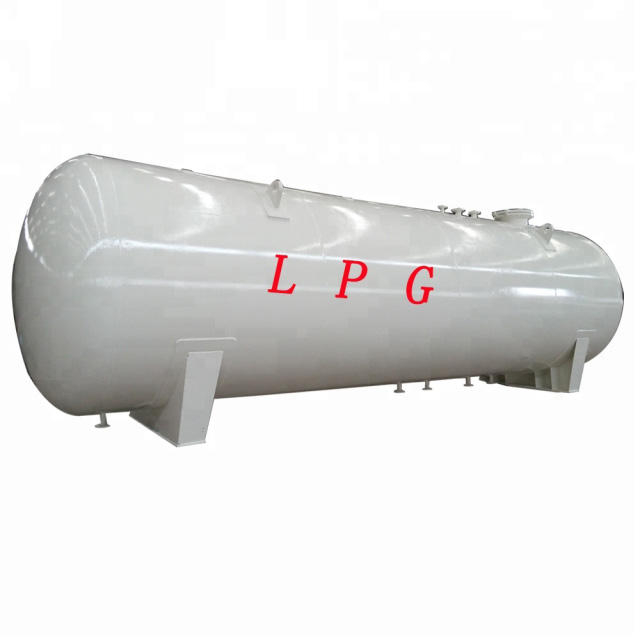
In commercial procurement, buyers often encounter confusing terminology. You might see "10 Ton" and "20 CBM" used interchangeably to describe the exact same physical asset. However, these terms evaluate the equipment through entirely different measurement lenses. One measures the weight of the stored gas, while the other measures the internal volume of the vessel. Selecting the right LPG Storage Tank requires moving past nominal capacity. You must calculate the actual usable volume and carefully evaluate your site constraints. A mismatch in sizing can disrupt daily operations or lead to unnecessary installation expenses. We designed this guide to provide facility managers and procurement teams with a clear, engineering-backed framework. You will learn how to accurately evaluate, size, and implement a suitable commercial gas storage solution for your specific operational facility.
Key Takeaways
The 80% Rule: A 20 CBM (Cubic Meter) tank holds a maximum of 16 CBM of liquid gas due to strict thermal expansion safety limits.
Volume vs. Mass: 20 CBM represents the water capacity; 10 Tons represents the approximate maximum weight of the propane/butane mixture it can safely store.
Installation Footprint: A 20 CBM Above Ground Tank offers the most cost-effective installation, but requires specific zoning and safety clearances.
TCO over Price: Long-term ROI depends heavily on material grade (e.g., Q345R steel), automated welding quality, and multi-stage leak testing protocols.
1. Demystifying the Metrics: 10 Ton vs. 20 CBM Explained
Let us clarify the core difference between CBM and Tons. CBM stands for Cubic Meters. It measures the internal water volume of an empty vessel. Tons refer to the physical mass of the liquefied gas stored inside. You cannot evaluate a 10 Ton LPG Tank based solely on its physical dimensions. You must understand the physics of gas storage.
Industry safety standards strictly dictate filling procedures. You can only fill an LPG vessel to 80% of its total water capacity. This rule leaves a critical 20% vapor space cushion. Liquid gas expands rapidly as ambient temperatures rise. Without this empty space, thermal expansion could trigger catastrophic pressure relief valve releases.
Let us look at the calculation reality. A vessel rated for 20 CBM yields only 16 CBM of usable liquid space. Next, you must factor in the specific gravity of LPG. Propane and butane mixtures typically possess a specific gravity ranging from 0.50 to 0.58 kg/L. This gravity fluctuates based on ambient temperature and the specific chemical blend. When you multiply 16 CBM by this specific gravity, the math becomes clear. You get roughly 8 to 10 metric tons of usable gas.
You should adjust your procurement strategy accordingly. We advise you to structure your Request for Quotation (RFQ) around usable daily consumption. Do not order based purely on nominal dimensions. Calculate your daily fuel burn rate first. Then, select a vessel size providing adequate buffer capacity to prevent frequent emergency deliveries.
2. Business Use Cases: Is This the Right Capacity for Your Operations?
Is a 20 CBM vessel the right capacity for your specific operations? We see this size deployed extensively across several core business sectors. It perfectly bridges the gap between light commercial use and heavy industrial demand.
Mid-Sized Skid Stations rely heavily on this precise volume. It offers the ideal capacity for modular auto-gas filling stations. These turnkey stations prioritize fast deployment and mobility. Operators can set up a dispensing station rapidly. They avoid committing to massive permanent infrastructure projects.
Commercial and agricultural heating systems frequently utilize this capacity. A mid-to-large poultry farm requires continuous, reliable heating during cold months. Seasonal crop drying operations consume massive amounts of fuel over short periods. This vessel size supports these high-demand applications easily. You will not require frustrating daily refueling deliveries to keep operations running.
Industrial processing and large fleets represent another massive use case. Manufacturing facilities use LPG for metal cutting, powder coating ovens, and continuous furnaces. High-turnover forklift fleets operate efficiently using weekly fuel delivery schedules. A single central storage vessel streamlines fleet logistics significantly.
You must perform a scalability check before purchasing. Guide your engineering team to calculate your peak BTU/hr requirements. Track your maximum theoretical consumption during the coldest seasonal shifts. Consider the following consumption warning signs:
Your facility requires fuel deliveries more than twice a week.
Your peak winter BTU/hr draw exceeds the vaporizer's capacity limit.
You anticipate a 30% or higher production scale-up within two years.
If you hit these triggers, you should recommend upgrading to a larger 30 CBM or 50 CBM system to maintain operational stability.
3. Placement Strategy: 20 CBM Above Ground Tank vs. Underground Solutions
When planning your site, you face a major infrastructure choice. You must choose between above-ground installations and underground configurations. Each strategy offers distinct advantages for commercial buyers.
The 20 CBM Above Ground Tank remains the undisputed commercial standard. This configuration dominates the global market for several practical reasons.
Pros of above-ground systems:
Lower initial capital expenditure compared to buried models.
Rapid installation timelines requiring minimal earthworks and excavation.
Easier visual inspection for safety compliance and maintenance audits.
High mobility for temporary commercial sites or leased commercial land.
Cons of above-ground systems:
Direct exposure to harsh weather elements and extreme UV radiation.
Requires physical protective barriers to prevent accidental vehicle collisions.
Consumes highly visible real estate on your active property footprint.
Underground and mounded configurations serve entirely different operational needs. They hide the vessel completely out of sight below grade.
Pros of underground systems:
Superior thermal stability in extreme cold climates.
Space-saving attributes allowing you to pave over specific ground clearances.
Heightened aesthetic appearance and improved physical security profiles.
Cons of underground systems:
High excavation, backfilling, and specialized engineering costs.
Rigorous cathodic protection monitoring requirements to prevent unseen soil corrosion.
Complex and lengthy local municipal permitting processes.
Base your final decision on three core evaluation criteria. Look at local weather extremes first. Evaluate your available square footage next. Finally, review your hard budget constraints.
| | Configuration Comparison Chart |
Evaluation Criteria | Above Ground Configuration | Underground Configuration |
Initial Capital Outlay | Low to Moderate | High (Excavation required) |
Maintenance Access | Excellent (Full visual inspection) | Limited (Requires specialized sensors) |
Climate Resilience | Vulnerable to surface temperature swings | Highly stable thermal environment |
Space Utilization | Consumes surface footprint area | Maximizes usable surface ground area |
4. Evaluating Manufacturer Quality and Engineering Standards
Let us review material and fabrication standards carefully. You should strictly look for specific pressure vessel steel grades. Q345R steel stands out as a highly resilient industry benchmark. Manufacturers must utilize fully automated welding processes during fabrication. Manual welding introduces unpredictable human error. It creates inconsistent seam integrity over time. Automated submerged arc welding ensures perfectly uniform structural integrity. This automated process prevents dangerous micro-fractures under continuous pressure cycling.
You must demand stringent testing verifications from your supplier. Reject any equipment quotes lacking comprehensive testing documentation. A reputable supplier will readily provide proof of multi-stage leak testing. This typically includes a minimum of five rigorous pressure and leak checks. They must perform 100% non-destructive radiographic testing on all critical weld seams. Hydrostatic testing remains an absolute mandatory requirement before dispatch.
Operational parameters demand equal engineering scrutiny. Ensure engineers design the vessel for a saturation pressure threshold matching your local climate accurately. A standard reliable rating requires the vessel to safely handle ≤1.63 MPa at 50℃. This pressure rating prevents dangerous safety venting during intense summer heatwaves.
Smart integration elevates your system reliability tremendously. Consider adding ultrasonic liquid level sensors and IoT monitoring equipment immediately. Remote inventory tracking gives your control room complete visibility. It prevents unexpected operational downtime completely. It also allows your fuel provider to schedule optimized delivery routes autonomously.
5. Site Preparation and Regulatory Compliance Readiness
Site preparation dictates the ultimate safety of your entire installation. You must finalize several land and infrastructure prerequisites before taking delivery. Pour a heavily reinforced concrete foundation designed specifically for the filled weight. Install robust steel crash bollards around the perimeter. Space them carefully to allow maintenance access but block vehicle impacts. Complete all comprehensive electrical grounding systems to mitigate static discharge risks.
Permitting and exemptions require proactive local municipal engagement. Discuss the necessity of reviewing local environmental and fire codes with your compliance officer. Some jurisdictions impose strict vapor pressure limits for industrial zones. Specific capacity thresholds might exempt certain mid-sized vessels from complex air quality permits. Researching these distinct exemptions early accelerates your project timeline drastically.
We highly recommend leveraging the "turnkey" engineering advantage. Advise your procurement team to seek manufacturers capable of supplying complete skid-mounted solutions. A bare vessel requires you to source external components manually. A fully integrated skid includes the vessel, specialized pumps, and efficient vaporizers. It also features explosion-proof control boxes and calibrated dispensers. Buying an integrated package dramatically reduces installation friction and eliminates component compatibility issues entirely.
Conclusion
Choosing an optimal capacity bridges the critical gap between light commercial applications and heavy industrial needs. It provides a robust, scalable energy reserve for growing operations.
Long-term safety relies strictly on selecting certified manufacturers. Appropriate site placement maximizes your operational efficiency. Integrating smart sensors elevates your inventory management process.
Here are your immediate next steps:
Aggregate your exact site dimensions and required safety clearance zones.
Calculate your peak winter daily consumption rates accurately.
Review your local municipal compliance and specific zoning requirements.
Request a comprehensive, engineering-led site evaluation from a certified manufacturing supplier.
FAQ
Q: How many gallons are in a 20 CBM LPG storage tank?
A: A 20 CBM capacity converts to approximately 5,283 nominal US gallons of internal water volume. However, safety regulations enforce a strict 80% maximum fill rule. This limits your actual fuel capacity to roughly 4,226 usable gallons of liquid propane or butane.
Q: How long does it take to manufacture and install a 10 Ton LPG Tank?
A: Typical B2B lead times range between 30 to 45 days for manufacturing. This timeframe factors in custom pipe fittings, automated welding, and mandatory 100% radiographic testing. Shipping logistics and site preparation usually add another 15 to 30 days before final commissioning.
Q: What accessories are mandatory for a safe 20 CBM above ground tank installation?
A: Regulatory standards require several critical safety accessories. Your installation must include safety relief valves, highly visible liquid level gauges, and accurate pressure gauges. Emergency shut-off valves and heavy-duty grounding cables are also strictly mandatory to prevent static discharge incidents.
Q: Can a 10 Ton tank handle both pure propane and mixed LPG?
A: Yes, but you must specify this during the RFQ stage. Pressure vessels receive ratings for specific gas vapor pressures. Pure propane generates higher vapor pressure than butane blends. Ensure the engineering team designs your vessel's saturation pressure threshold specifically for your intended gas mixture.