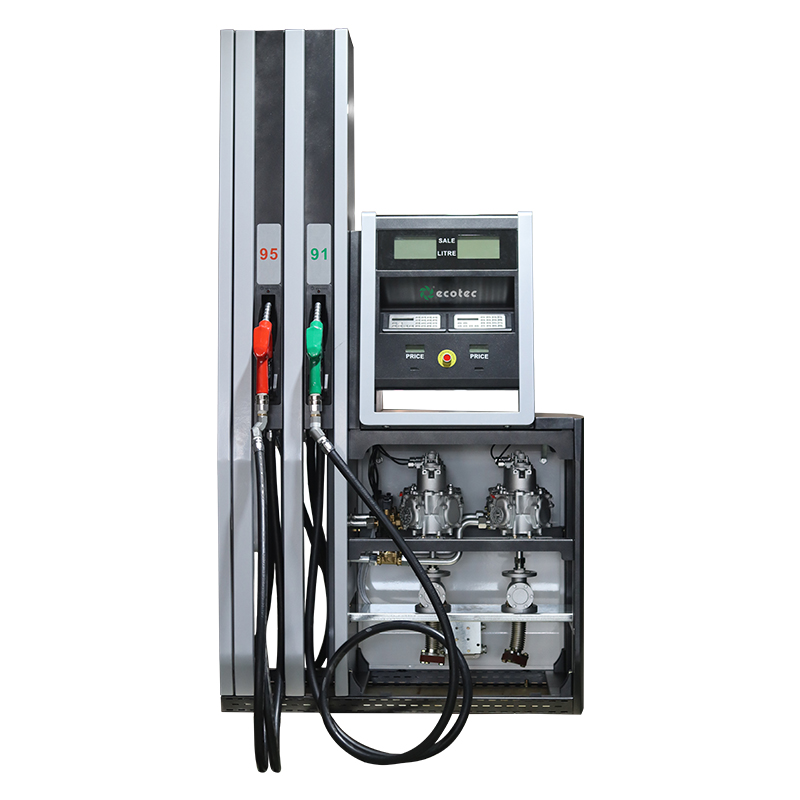
Fueling stations and fleet hubs face peak-hour congestion every single day. Lines stretch into the street during the morning rush. This frustrates customers who simply want to fill up quickly and leave. When drivers abandon long queues, it directly caps your daily revenue. Legacy 2- or 4-nozzle pumps act as massive operational bottlenecks in these situations.
Simply adding more fueling islands requires expensive real estate expansion. Most stations cannot pour more concrete or extend their canopies. Upgrading existing islands to higher-density dispensing units is often the most viable path to scaling throughput. You maximize your current footprint without buying adjacent land.
We will evaluate the operational impact, capital requirements, and integration complexities of transitioning to modern multi-product dispensers. Operators must understand how to navigate this hardware shift. You will learn how modernizing your fuel islands can eliminate congestion, secure transactions, and significantly boost your daily profitability.
Key Takeaways
Upgrading to a Six Nozzle Fuel Dispenser can increase simultaneous fueling options, reducing average vehicle queue times without expanding the station's physical footprint.
Modern, industry-standard configurations (such as the Wayne Type Petrol Pump) offer integrated EMV compliance, reducing fraud risk while improving payment processing speed.
Accurate ROI calculations must weigh the projected increase in peak-hour volume against realistic installation downtime and site retrofitting costs.
Implementation success depends on thorough audits of existing underground piping, submersible pump capacity, and POS software compatibility.
The Throughput Bottleneck: Why Legacy Dispensers Limit Station Revenue
Measuring the Cost of Inefficiency
Older hardware directly chokes your revenue potential. You must identify "drive-offs" during peak operating hours. A drive-off occurs when a customer pulls in, sees a massive line, and immediately leaves for a competitor. Losing just ten cars a day easily translates to thousands of dollars in lost annual fuel margin. You also lose the high-margin convenience store purchases these customers typically make.
Analyze the constraints of older, single- or dual-product dispensers on customer flow velocity. Legacy equipment forces customers to search for specific pumps dispensing specific fuel grades. This creates uneven lane usage. One lane backs up into the street while another sits empty. Customers waste valuable minutes maneuvering around each other. Upgrading your delivery mechanisms actively resolves these flow imbalances and keeps vehicles moving steadily through your forecourt.
Footprint vs. Output Limits
You must acknowledge the physical impossibility of expanding canopy space for most urban and highway-adjacent stations. Real estate is either unavailable or prohibitively expensive. Municipal zoning laws often prevent you from widening your property lines. You are locked into your current footprint.
This reality defines the necessity of increasing product density per fueling island. You need to squeeze more transactional capacity out of the exact same square footage. Replacing a single-hose unit with a multi-product dispenser instantly multiplies your dispensing capabilities.
The comparative data block below illustrates how replacing standard units alters site capacity without demanding extra land.
Dispenser Configuration
Fuel Grades per Lane
Simultaneous Users per Island
Lane Hopping Risk
Legacy Single-Nozzle
1
2
High
Legacy Dual-Nozzle
2
2
Moderate
Modern 6-Nozzle Multi-Product
3
2
Eliminated
Core Evaluation Dimensions of a Six Nozzle Fuel Dispenser
Multi-Product Delivery and Lane Optimization
Modern forecourts demand ultimate convenience. You can offer up to three distinct fuel grades per side using a Six Nozzle Fuel Dispenser. This configuration fundamentally prevents drivers from lane-hopping to find specific fuel types. Every single lane serves every single customer need. Traffic flows smoothly because drivers pull into the first available spot.
These units facilitate dual-sided simultaneous dispensing without pressure drops. Two vehicles can fuel at the exact same time on opposite sides of the island. You must ensure adequate submersible turbine pump (STP) capacity to maintain this performance. If your STP lacks sufficient horsepower, simultaneous dispensing will slow down the flow rate, frustrating customers. Upgrading the underlying pump system often goes hand-in-hand with adding extra nozzles to guarantee a premium customer experience.
Best Practice: Always conduct an STP horsepower audit before authorizing a dispenser swap. A 1.5 HP or 2 HP system generally handles simultaneous high-volume demand much better than older 3/4 HP models.
Metering Accuracy and Shrinkage Reduction
Station owners lose substantial money to inaccurate mechanical components. You must transition from older mechanical meters to high-precision electronic flow meters. Mechanical meters suffer from wear and tear over time. They begin to experience "meter drift." This drift usually results in giving away slightly more fuel than the customer paid for. Across thousands of gallons, this shrinkage devours your profit margins.
Operators should implement advanced temperature compensation technology. Fuel expands and contracts based on underground and ambient temperatures. Without temperature compensation, you often dispense more physical volume during colder weather than the register records. Modern dispensers adjust calculations dynamically. They ensure dispensing accuracy and drastically reduce volumetric fuel loss.
Payment Velocity and Security
Slow payment processors create bottlenecks just as quickly as slow pumps. You need to integrate modern EMV and contactless payment modules natively. Tap-to-pay and mobile wallet integrations shave crucial seconds off every single transaction. Saving fifteen seconds per customer translates into hours of reclaimed operational time across a busy week.
You also need to support fleet management card readers. B2B transactions keep volume high during off-peak hours. Expediting B2B transactions at standard retail pumps encourages commercial fleets to choose your station. Secure, encrypted card readers protect both your business and your customers from skimming devices. Fraud reduction directly protects your brand reputation and bottom line.
Assessing "Wayne Type Petrol Pump" Architectures and Modern Equivalents
Industry-Standard Reliability
Equipment downtime ruins station profitability. You must evaluate the availability of spare parts before choosing a manufacturer. Local technicians possess deep familiarity with a Wayne Type Petrol Pump and equivalent global dispenser architectures. Buying a widely recognized brand means your maintenance provider likely carries spare parts in their service truck. Obscure brands might require weeks of shipping for a simple valve replacement.
Assess the durability of external housing in high-traffic and harsh weather environments. Stations in coastal areas or regions experiencing heavy road salt require stainless steel enclosures. Powder-coated steel might save capital upfront, but it rusts quickly under harsh conditions. Rust degrades the customer's perception of your fuel quality. Invest in robust external materials to ensure a long operational lifespan.
High-Flow vs. Standard Flow Applications
Matching equipment to your primary customer base prevents operational headaches. You must differentiate between standard retail flow rates and high-flow configurations. Standard flow delivers roughly 10 gallons per minute (GPM). This suits passenger cars perfectly. High-flow models push 22+ GPM. They are absolutely necessary for heavy-duty fleet integration and diesel islands.
Passenger Vehicles: Require standard 10 GPM nozzles. High-flow nozzles will cause splash-back and trigger automatic shutoffs constantly.
Commercial Transport: Require 22+ GPM high-flow configurations. Using a standard nozzle on an 80-gallon semi-truck tank takes too long and drives commercial customers away.
Satellite Dispensers: Consider adding a satellite hose for semi-trucks, allowing them to fill saddle tanks on both sides simultaneously.
Common Mistake: Installing high-flow diesel nozzles on a mixed-use retail island. Passenger truck owners cannot use commercial nozzles due to filler neck size differences. Always separate heavy-duty diesel lanes from standard retail traffic.
Financial Feasibility: Calculating the ROI of an Upgrade
Capital Expenditure (CapEx) Assumptions
Upgrading your forecourt requires clear financial modeling. You must factor in the baseline cost of the dispensing units themselves. Include the cost of secure payment modules, hanging hardware (hoses, breakaways, nozzles), and freight delivery. These form your core hardware expenses.
You must also calculate the hidden costs to avoid budget blowouts. These include:
Concrete Island Modifications: New footprints may require breaking and repouring the fueling island.
Containment Sump Upgrades: Environmental regulations often dictate upgrading underneath the dispenser when changing the hardware above it.
Permitting Fees: Local fire marshals and environmental agencies require permits and site inspections.
Electrical Updates: Modern screens and processors might draw different electrical loads or require updated data conduits.
Operational Expenditure (OpEx) and Revenue Gains
New equipment improves your daily cash flow. Model the revenue impact of processing 10-15% more vehicles during peak rush hours. Removing lane congestion allows more cars to enter the property. More cars equal more fuel volume and higher convenience store foot traffic.
You can also project significant maintenance savings. Legacy hardware breaks down frequently, generating expensive emergency service calls. Consolidating older hardware into fewer, newer units under factory warranty eliminates these unpredictable expenses. Predictable operational expenditures allow for better quarterly financial planning.
Implementation Realities: Site Retrofitting and Downtime Risks
Piping and Subsurface Compatibility
Your above-ground equipment relies entirely on your underground infrastructure. Verify existing underground storage tank (UST) product lines first. They must align with the new 6-nozzle manifold requirements. If your current station only has two fuel grades piped to the island, adding a 3-grade dispenser requires either blending valves or breaking concrete to lay new product lines.
Assess submersible pump output early in the planning phase. You want to guarantee consistent flow rates when all nozzles operate simultaneously across the forecourt. A drop in pressure during rush hour negates the benefits of adding more nozzles. Your installation partner can perform a flow-rate test on your existing system to determine if the STP needs replacing.
POS and Back-Office Software Integration
Hardware is useless if it cannot talk to your cash register. Confirm protocol compatibility with current site controllers. The industry relies on specific languages like IFSF, Gilbarco, or Wayne protocols. Ensure your Point of Sale (POS) system natively understands the new dispensers.
Test wet-stock management system integrations prior to live deployment. Your automatic tank gauges (ATG) and back-office software must track inventory accurately. A communication failure here leads to accounting nightmares or unexpected dry tanks. Run a full transaction loop test—from nozzle authorization to back-office receipt—before opening the lane to the public.
Phased Rollout Strategies
Closing the entire station halts your cash flow completely. Plan a "half-site" or "lane-by-lane" upgrade instead. This strategy maintains partial station operation and revenue flow during the installation period.
You can shut down the outer islands first, upgrade them, and reopen them. Then, move to the inner islands. While this might add a slight premium to the contractor's mobilization fees, keeping the convenience store open and fuel flowing protects your daily bottom line and prevents loyal customers from building habits at a competitor's station.
Conclusion
Upgrading to 6-nozzle multi-product systems is a calculated infrastructure play to maximize throughput per square foot, not just a cosmetic update.
Eliminating single-grade lanes prevents "lane-hopping," reduces forecourt accidents, and shortens customer wait times significantly.
Transitioning to high-precision electronic flow meters and modern EMV payment blocks stops fuel shrinkage and reduces transaction fraud.
Operators should initiate a comprehensive site survey focusing on underground piping compatibility and POS software readiness before requesting vendor quotes.
Plan a phased rollout strategy to maintain revenue streams and keep the convenience store accessible during the physical installation process.
FAQ
Q: Do I need to replace my underground piping to install a Six Nozzle Fuel Dispenser?
A: Not necessarily, provided your current product lines match the fuel grades you intend to dispense. However, manifolding or sump modifications may be required depending on your existing setup. If you want to introduce a new fuel grade, new piping will likely be necessary.
Q: Are modern Wayne Type Petrol Pumps compatible with older third-party POS systems?
A: Most modern dispensers support universal communication protocols. However, a site controller upgrade or specific protocol converter may be necessary to enable full EMV functionality and remote diagnostic features. Always verify software compatibility before purchasing hardware.
Q: How long does a station typically need to shut down for a dispenser upgrade?
A: A straightforward swap on existing footprints can take 1-3 days per island. If concrete work, conduit replacement, or new containment sumps are required, downtime can extend to a week or more per phase. Phased rollouts help keep the station partially open.
Zhejiang Ecotec Energy Equipment Co., Ltd. is a professional manufacturer of gas station equipment, can offer customer complete solution from design to after-sales service with good price and quality.